

















Electroless nickel (EN) technologies have long served as critical coatings in the oil and gas industry, providing barrier protection to various components exposed to some of the most aggressive service environments imaginable. These components routinely experience exposure to high-pressure and/or high-temperature conditions, sour gas (H₂S and CO₂), brine solutions that contain chlorides, and abrasive particulates. In such demanding conditions, material degradation due to corrosion and wear poses significant operational, safety, and economic risks, especially when these parts require very long service lives due to the cost of installation and replacement [1]. Therefore, EN coatings have emerged as a widely adopted surface engineering solution to enhance the corrosion and wear resistance of oil and gas components.
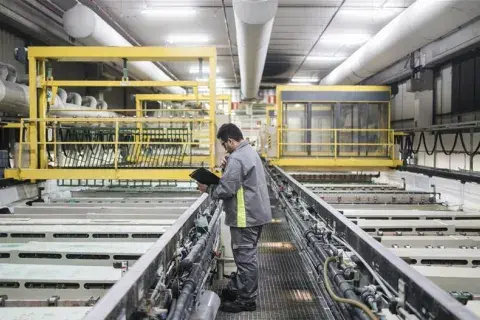
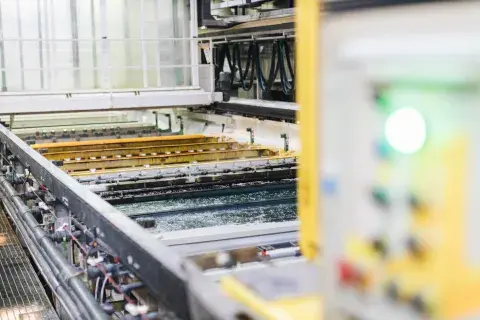
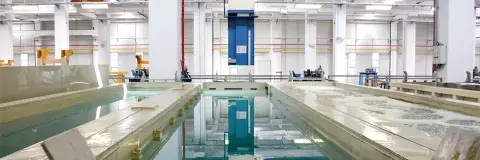
Electroless nickel plating is an autocatalytic chemical reduction process wherein nickel ions are reduced from solution onto the component surface (substrates like carbon steel) without the use of an external electrical current. The reducing agent used for most commercial processes is sodium hypophosphite, which introduces phosphorus into the deposit, thus forming a nickel-phosphorus alloy. The properties of the EN deposit can be tailored to meet the service condition requirements by varying the amount of P in the alloy. This is achieved by adjusting several key process parameters, including the composition of the EN plating solution, operating temperature, pH of the solution, and the agitation of the solution utilized during deposition of the coating.
High-phosphorus electroless nickel deposits (those containing more than 10.5% phosphorus by weight) are preferred for oil and gas components due to their exceptional performance characteristics. These deposits are considered amorphous, with very low porosity and internal stress, providing the highest levels of corrosion resistance. EN coatings are also relatively hard, offering excellent wear resistance, particularly in abrasive or erosive environments such as those found in oil and gas extraction and transport, where sand and grit are common [2]. Another key advantage of EN, as a direct result of the autocatalytic deposition process, is its ability to plate uniformly over complex geometries. This includes blind holes and internal surfaces that are typically difficult or impossible to coat using conventional electrolytic plating methods.
The combination of high hardness, superior corrosion resistance, and uniform coverage makes EN especially well-suited for oil and gas applications. The table below outlines typical components where EN is commonly applied.
Table 1. Applications of Electroless Nickel in the Oil and Gas Industry [3]
| Component | Base metal | EN type | Typical coating thickness (µm) | Property of interest* |
| Tubes | Steel | High P | 50 - 100 | CR, WR, U |
| Pump housings | Steel | High P | 50 – 75 | CR, WR |
| Sucker rods | Steel | High P | 25 – 75 | CR, WR, U |
| Ball valves | Steel | High P | 25 - 75 | CR, WR |
| Blow out preventers | Steel | High P | 25 – 75 | CR, WR |
| Packers | Steel | High P | 25 – 75 | CR, WR, U |
| *CR=Corrosion Resistance; WR=Wear Resistance; U=Uniformity | ||||
The uniform deposition, excellent barrier properties, and superior hardness make electroless nickel coatings perfectly suited as a robust and technically validated solution for mitigating corrosion and wear on the critical components used in the oil and gas sector.
[1] Duncan, R.N., “Performance of Electroless Nickel Coated Steel in Oil Field Environments,” Material Performance, Vol. 21, 1983, pp. 28 – 34
[2] Duncan, R. N., “The Metallurgical Structure of Electroless Nickel Deposits: Effect on Coating Properties”, Plating & Surface Finishing (Nov 1996) pp. 65 – 69
[3] Mallory, G.O. and Hajdu, J. B., (1990) Electroless Plating: Fundamentals and Applications. Chapter 8: Engineering Applications of Electroless Nickel pp. 207 – 219
Read the full article in the August 2025 issue of Materials Performance