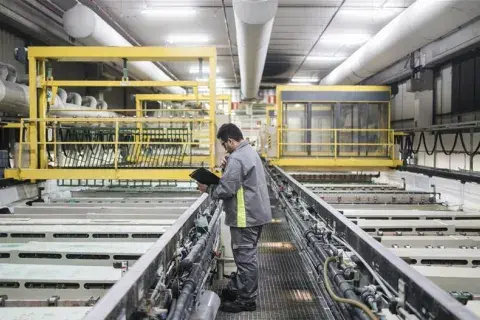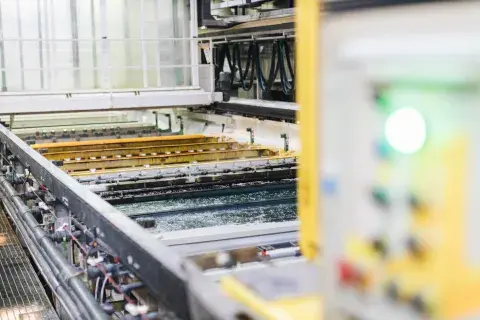




















Electroless nickel (EN) has long been an essential coating technology for the aerospace industry, offering a variety of protective properties that enhance the performance and longevity of critical components. Unlike traditional electroplating, EN is an auto-catalytic process, which uses a chemical reaction, rather than an electrical current, to produce a uniform nickel-phosphorus alloy deposit over the surface of the substrate. This provides conductivity, hardness, wear resistance, corrosion protection, and Electromagnetic Interference (EMI) shielding. These characteristics are particularly advantageous for aerospace components where precision, durability, and reliability are key performance factors, and their importance will continue to grow. Let’s explore the different aspects of electroless nickel and how these factors promote longevity and performance.
Uniform coating distribution
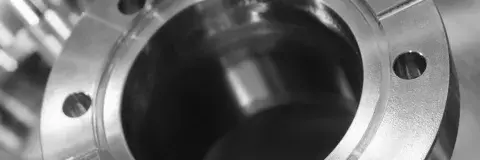
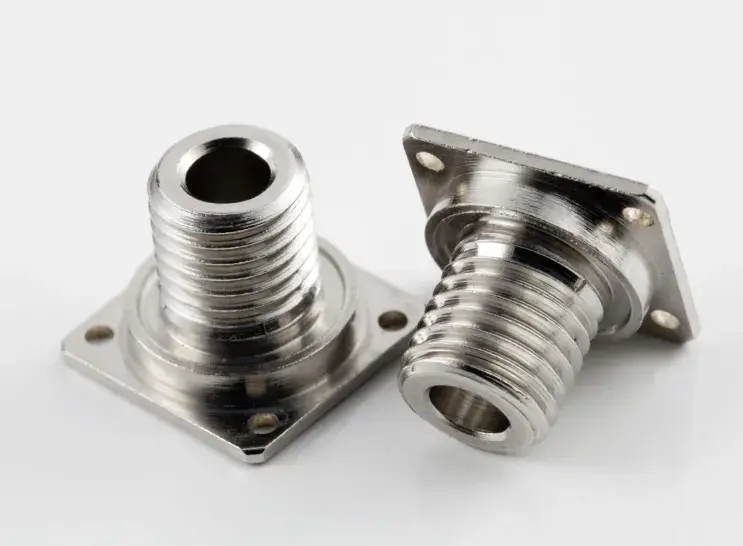
The ability of electroless nickel to produce a uniform coating on even the most complex geometries is one of the most significant advantages of the technology. In aerospace applications, components such as electrical connectors, landing gear, fuel line parts, and turbines often feature complex designs that include recesses, cavities, and irregular surfaces.
The electrochemical mechanisms of traditional electroplating, dictated by Faraday’s Law, can be severely restrictive when processing complex geometries, resulting in an uneven deposit distribution over the surface of the complex part. The reliance of the EN deposition mechanism on a chemical reaction leaves it unbounded by these restrictions, resulting in a uniform layer of protection, regardless of the degree of surface complexity.
Corrosion resistance
The corrosion resistance characteristics of electroless nickel are especially beneficial in aerospace applications where components are routinely exposed to harsh environmental conditions, including high humidity, temperature fluctuations, and corrosive elements. EN deposits with high phosphorus concentrations (10.5 – 12%) provide exceptional corrosion protection. The nickel-phosphorus layer acts as a barrier, protecting the substrate from corrosive elements. Higher phosphorus concentrations in the deposited alloy produce an amorphous structure, absent of grain boundaries, which act as entry points for corrosive elements to reach the substrate. This protective layer is crucial for elements that operate in corrosive environments, such as aircraft exposed to de-icing chemicals, marine atmospheres, or jet exhaust.
Wear resistance
The deposit hardness properties of electroless nickel enhance the substrate surface of aerospace components, making them more resistant to abrasion and wear. The hardness of an EN deposit can be further enhanced with heat treatment processes, providing additional protection for components in more demanding aerospace applications.
This capability is especially beneficial for components exposed to high-friction environments, such as landing gear and engine parts. The versatility of EN also allows for the co-deposition of composite particles such as silicon carbide, hexagonal boron nitride, PTFE, and even diamonds to further enhance wear and lubricity properties.
Improved adhesion
Electroless nickel plating exhibits exceptional adhesion to various substrates used in aerospace applications, especially steel and aluminium, forming strong bonds that ensure the protective coating remains intact under mechanical and thermal stresses. With proper preparation, EN also adheres to engineering plastics/composites, including PEEK and nylon, producing a hardened, conductive surface for enhanced protection. Additionally, EN coatings are compatible with various post-plating processes, such as machining, painting, and laser printing, allowing further customization of the component's surface.
EMI shielding
As aircraft rely more heavily on electronic systems for navigation, control, and communication, electroless nickel can protect sensitive electronics and communication systems from electromagnetic interference by providing effective EMI shielding. This capability is increasingly important as innovations in electronics produce more demanding and complex systems.
The cost-benefit analysis - why EN?
While electroless nickel costs are typically higher than traditional electroplating processes, the enhanced properties of the deposit help reduce maintenance costs and extend the useful life of aerospace components. The durability of the coating, coupled with its corrosion-resistant characteristics, reduces repair and replacement costs, resulting in a higher ROI for end-users over the life of the components.
Electroless nickel plating is essential in enhancing overall aerospace performance and reliability. Its ability to provide uniform coatings on complex geometries and superior corrosion and wear resistance makes it an invaluable technology. Aerospace systems will continue to innovate and operate in increasingly challenging environments, making EN plating a vital solution for ensuring the longevity and functionality of critical components.
Read the full article, available now in Aerospace Manufacturing.