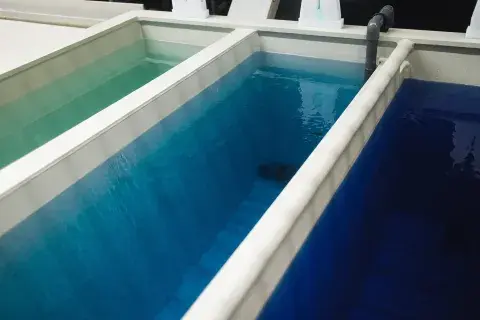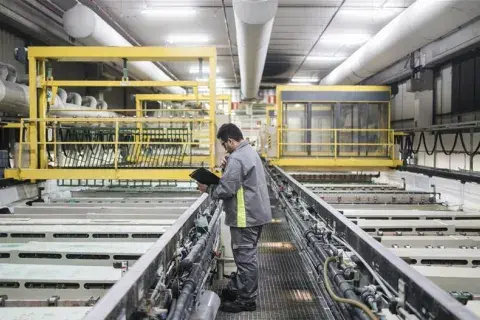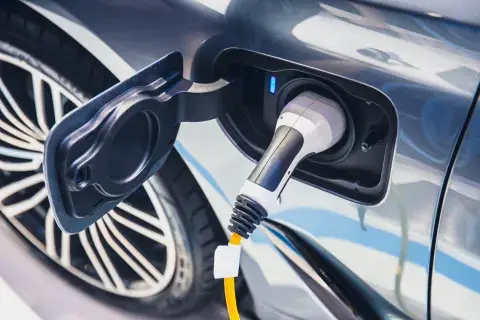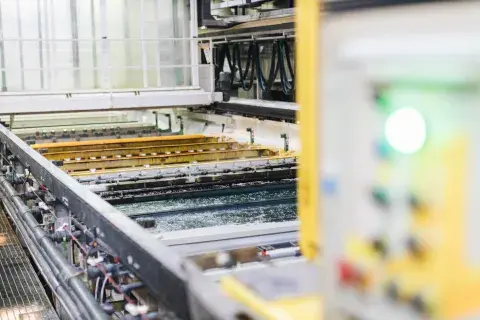



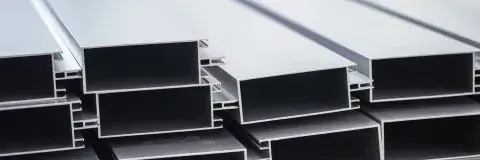

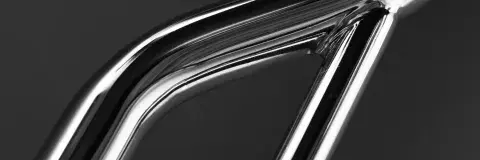


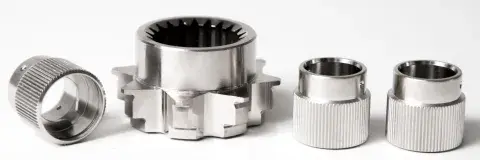

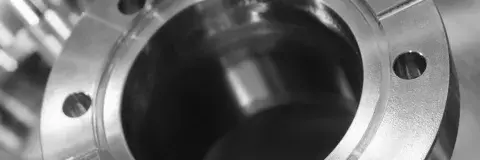





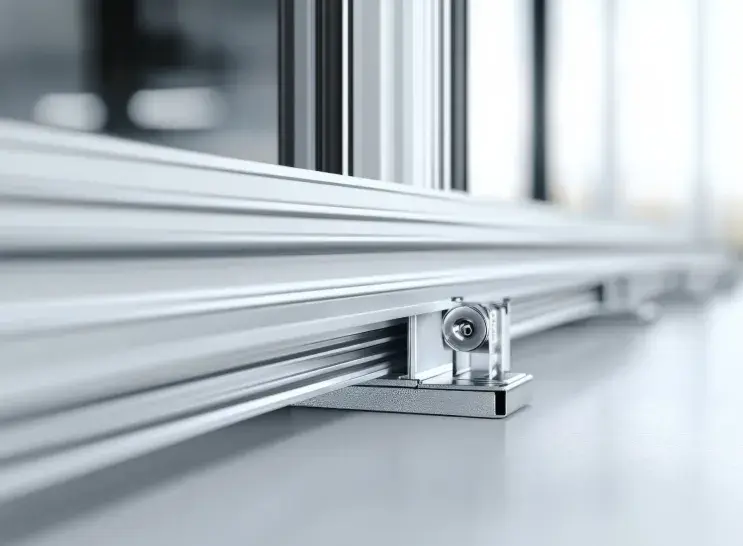
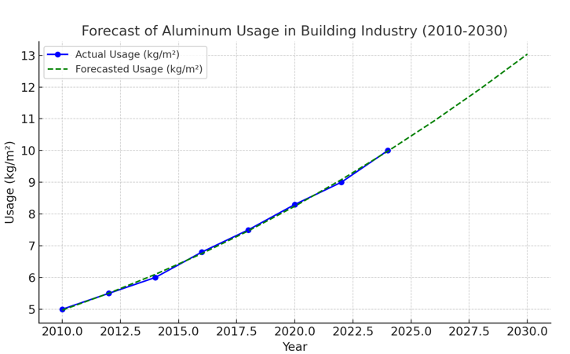
Aluminum is gaining momentum in the automotive and construction industries thanks to its lightweight profile, versatility and optimal thermal performance (Fig. 1). In electric vehicles (EVs), it offsets the weight of batteries and improves range. As a result, EVs use approximately 30% more aluminum than internal combustion engine (ICE) vehicles, particularly in battery enclosures, body structures and lightweight assemblies.
In the construction industry, aluminum is commonly used in windows, facades, doors and structural systems, delivering a combination of strength and sustainability. Architects and designers are turning to aluminum for its ability to meet evolving building regulations while supporting energy efficiency and sustainable design practices [1-5]. It is evident that the use of aluminum is not slowing down in these sectors, which creates the need for innovative and sustainable surface finishing solutions to enhance material performance and adapt to the specific needs of each industry.
The shift to secondary aluminum
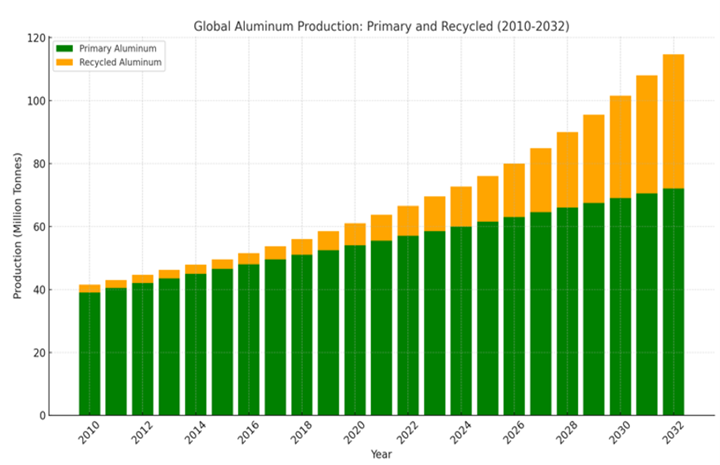
With rising energy costs and mounting pressure to reduce emissions, manufacturers are reevaluating their material options. One area that continues to grow is the need for secondary (recycled) aluminum as manufacturers, particularly across automotive and construction industries, seek to meet sustainability goals and reduce production costs (Fig. 2). This shift from primary to secondary aluminum has the potential to cut energy consumption by up to 95%, making it both environmentally sustainable and cost-effective, while mitigating raw material sourcing pressures.
While offering clear benefits, this shift also introduces technical challenges. Recycled aluminum often contains a wide range of alloying elements and residual impurities, which may compromise corrosion resistance and surface finish. These compositional inconsistencies lead to uniform and filiform corrosion. Uniform corrosion degrades the entire surface, while filiform corrosion spreads beneath coatings and weakens adhesion. These effects are problematic in EV parts, architectural panels and coated structural components where aesthetics and durability are equally critical.
To meet the technical demands of recycled aluminum, advanced surface finishing technologies, including anodizing, passivation and conversion coatings, have been developed that enable secondary aluminum to meet the appearance and performance expectations of the automotive and construction industries.
The following sections explore the anodizing process, how organic-based additives improve performance and how innovative sealing technologies further extend corrosion resistance, durability and aesthetics.
Anodizing for improved performance and appearance
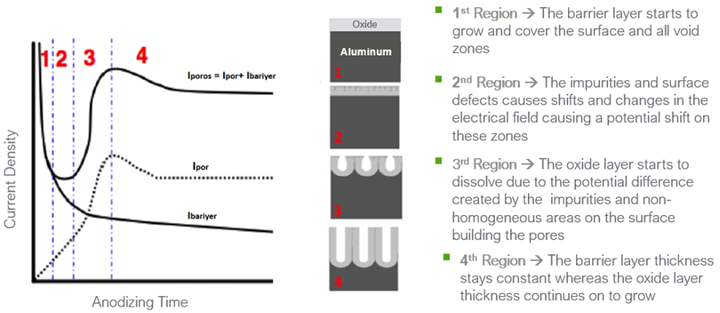
Anodizing plays a crucial role in aluminum surface treatment, and the initial pore formation stage is critical to delivering optimal finishes. Any irregularities during this step has the ability to significantly affect the structure and consistency of the anodic oxide layer. This is especially true for recycled or complex alloys, where a higher number of grain boundaries or elevated levels of noble alloying elements such as copper, iron or nickel disrupt the process. These conditions often result in defect zones that interfere with pore formation and compromise the finish.
As shown in Fig. 3, based on Choi’s doctoral thesis, early stage process parameters strongly influence pore formation, barrier development and oxide morphology.
The role of organic-based additives
Organic-based additives used during anodizing are designed to mitigate pretreatment inconsistencies. By supporting more uniform pore development and reducing structural inconsistencies, these additives enhance oxide layer consistency and barrier control. The result is a more consistent and transparent anodic oxide with improved visual appearance, enhanced electrocoloring performance and more uniform metal salt deposition. Fig. 4 demonstrates the effect of these additives on pore distribution and layer morphology.
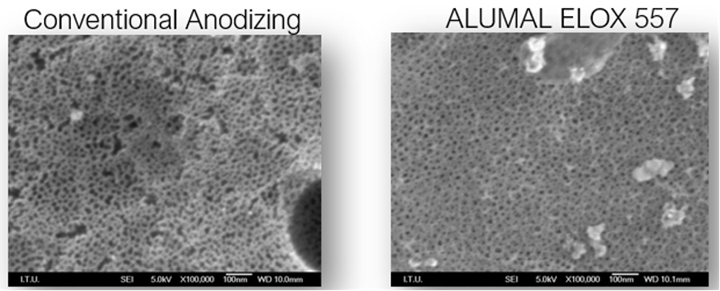
In addition to promoting uniform oxide formation, organic-based additives offer several operational and environmental benefits that improve the overall efficiency of the anodizing process:
High operating temperatures: These additives enable anodizing at higher temperatures, reducing energy consumption and increasing process efficiency.
Improved bath tolerance: By increasing tolerance for dissolved aluminum, the process reduces the need for frequent decanting, ion exchange treatments and desiccants. This results in fewer interventions and less chemical and water waste.
Enhanced oxide structure: Additives that refine pore morphology contribute to improved uniformity and reduced pore size, which enhances electrocoloring performance, ensures color stability and decreases sealing chemical consumption.
Extended bath life and reduced maintenance: Improved resistance to aluminum buildup, slower chemical degradation and lower sulfuric acid use increase bath longevity and reduce the frequency of maintenance.
Aesthetic and performance gains: Additives enhance gloss and maintain surface consistency, resulting in more uniform finishes for decorative and architectural applications.
Electrocoloring advancements
As aluminum surface treatment has entered a new era of precision and performance — especially for recycled or complex alloys — innovations in electrochemical methods are delivering improved structural consistency, durability, color uniformity and corrosion protection across a wide range of applications.
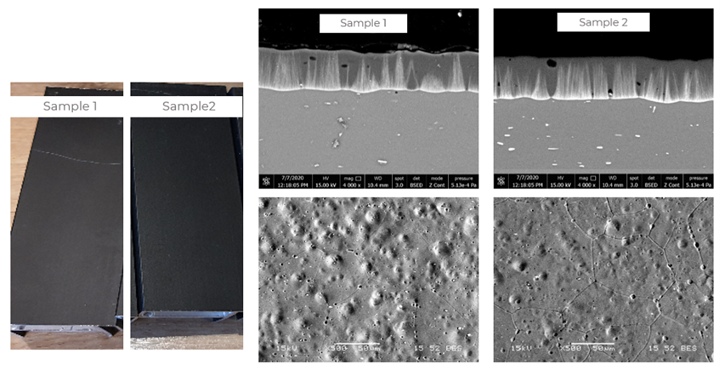
Electrocoloring, for example, is essential for achieving a consistent appearance on anodized aluminum. Yet with recycled alloys, variable composition can create uneven color development.
To address this, stabilizing additives have been developed for electrocoloring baths to ensure homogenous precipitation into the pores, improving repeatability and enhancing color depth.

Sealing technologies for long-term durability
Sealing is the final step in the anodizing process and plays a critical role in ensuring long-term durability, corrosion resistance and visual stability of anodized aluminum surfaces. These technologies have evolved to address new performance challenges while remaining compliant with current and future regulations.
Nickel-based cold seals
Nickel-based cold sealing has long provided reliable corrosion protection for anodized aluminum. As recycled and complex alloys gain traction, traditional methods face new challenges. Elevated levels of alloying elements like copper, iron and magnesium can interfere with pore closure, reduce sealing uniformity and increase susceptibility to cracking under thermal stress.
Next-generation nickel-based technologies address these issues by forming a controlled reaction layer that reinforces the anodic oxide structure without discoloration. This denser, chemically stable seal enhances corrosion resistance and structural integrity, even under demanding environmental conditions.
Optimized for long production cycles, these technologies maintain pH stability, deliver predictable sealing quality and support short processing times. For example, FastSeal, a new mid-temperature option, shortens sealing time to 1.5 minutes per micron and improves fingerprint resistance. This makes it well-suited for secondary alloys with higher magnesium and zinc content.
Nickel-free cold seals
As regulations continue to limit the use of heavy metals, nickel-free sealing technologies are gaining traction. These alternatives provide high surface hardness and resist staining and fingerprints, which is especially important for applications like premium packaging or personal care products. Modern nickel-free systems offer compliant performance without compromising surface quality or regulatory safety.
Bi-metal sealing
Bi-metal sealing chemistries use two or more reactive metal ions to form highly durable protective layers. They are designed specifically for challenging alkaline environments, such as kitchenware exposed to repeated dishwasher cycles or harsh cleaning agents. These coatings provide a high level of chemical and mechanical resistance, ensuring long-lasting protection even on anodized surfaces.
Testing has shown that bi-metal seals are able to last up to six times longer than those treated with conventional sealing methods. With improved scratch resistance and enhanced corrosion protection, these technologies significantly extend the service life of both consumer goods and architectural elements such as elevator trims, handrails, bathroom fixtures, ducting and HVAC components.
Nickel-silicate sealing
The latest advancement in anodized aluminum sealing involves integrated nickel-silicate technologies. By combining a nickel-based cold seal with a silicate-based hot seal, this hybrid approach forms a robust composite barrier that penetrates deeply into the anodic oxide pores. Unlike conventional silicon-only sealing, which forms a superficial layer prone to abrasion, the nickel-silicate composite creates a durable reaction layer that enhances corrosion resistance, alkaline tolerance (up to pH 13.5), and scratch protection.
This innovative combination, paired with nickel-containing or nickel-free cold seals, enables the silicate layer to develop into a durable composite structure, outperforming prior sealing technologies in durability and resistance.
This approach is particularly effective for challenging substrates, including recycled or high-alloy aluminum commonly used in architectural, automotive and industrial applications. The deep-penetrating composite layer delivers long-term durability while maintaining visual quality and electrocoloring integrity. By controlling pore structure, thickness and chemical composition, nickel-silicate-combined sealing technologies enable reproducible, high-performance anodic surfaces.
The road ahead
Aluminum continues to solidify its role as a leading material in the automotive and construction sectors, where environmental responsibility and enhanced reliability are top priorities. As the industry moves toward recycled alloys and greener practices, advances in surface treatments, including anodizing, passivation and conversion coatings, will play a pivotal role. Investing in next-gen surface treatments like these, and aligning with evolving industry standards, manufacturers will be able to maximize design flexibility, improve efficiency and position themselves for long-term success.
Read the full article, available now on pfonline.com
References
1 Guillaume, G. and Pacheco, D. (2022), “EPD Background Report.” Available at: aluminum.org/sites/default/files/2022-10/Semi-Fab_LCA_Background_Report.pdf (Accessed: 05 February 2025).
2 Elisa Andreotti (2024), “Report Reveals Global Aluminium Demand to Reach New Highs After Covid,” International Aluminium Institute. Available at: international-aluminium.org/report-reveals-global-aluminium-demand-to-reach-new-highs-after-covid/ (Accessed: 05 February 2025).
3 International Aluminium Institute (IAI).
4 “Aluminium demand is rising – here’s how to make it sustainable,” World Economic Forum (WEF). Available at: weforum.org/stories/2023/11/aluminium-demand-how-to-make-it-sustainable/
5 (2021), “Aluminum Building and Construction Usage Study.” John Burns Real Estate Consulting. Available at: aluminum.org/sites/default/files/2022-03/JBREC_Aluminum_Analysis_4.2021_Summary.pdf (Accessed: 05 February 2025).
6 (2022), “Construction Materials Outlook and Usage Growth” Aluminium Association PowerPoint presentation. Available at: aluminum.org/sites/default/files/2022-03/JBREC_Aluminum_Analysis_4.2021_Summary.pdf