

















Summary: Technical cleanliness in fastener production is critical for the safety and reliability of modern, miniaturized automotive electronics. A key improvement is the use of reinforced pickling methods with specialized additives, such as MacDermid Enthone's ACTANE, which significantly reduces particle counts and enhances coating adhesion. Maintaining high cleanliness standards is essential to prevent failures in critical systems like electronic braking and steering.
Technical Cleanliness in Fastener Production
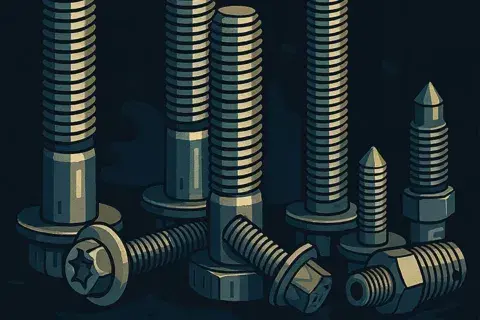
In today’s automotive industry, where electronic components are becoming increasingly compact and sophisticated, technical cleanliness in fastener production is more crucial than ever. The presence of contaminants, especially metallic particles, can pose severe risks to electronic reliability and product safety. Understanding the fastener production process is essential for ensuring the integrity of modern automotive systems.
The Impact of Contaminants on Electronics
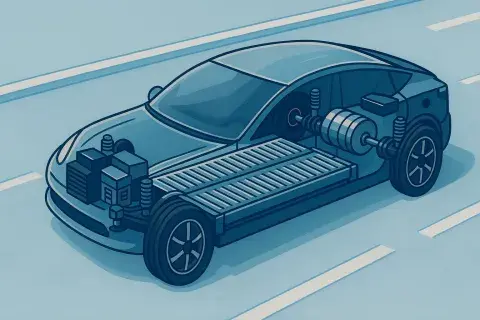
Modern automotive design relies on sophisticated electronics. From electric converters and control units to critical safety systems like braking and steering, the list is virtually endless. Electronics are now embedded in nearly every aspect of a vehicle, and they’re becoming more compact.
The miniaturization of electronic components means that even the smallest particles can cause significant issues. For instance, some of the modern electronic circuits feature contact points that are only 300 micrometers, or 0.3 mm, apart.
If a particle, such as one originating from a fastener, enters this space, it can lead to short circuits or insulation breakdown, ultimately compromising the reliability and safety of the entire system.
Voltage levels in automotive electronics have also risen, moving from traditional 12V systems to 48V configurations. At these voltages, even partial contact from a conductive contaminant, such as a metallic particle, can cause electrical arcing, potentially leading to short circuits or more catastrophic damage to PCB boards. Given these risks, it is increasingly important to maintain high technical cleanliness in faster production.
Sources of Contamination in Fastener Production
The fastener production process involves multiple steps, each of which can contribute to contamination if not properly managed:
- Wire Drawing and Cold Forming: During this initial phase, material defects and forming issues can generate metallic particles that adhere to the fastener surface.
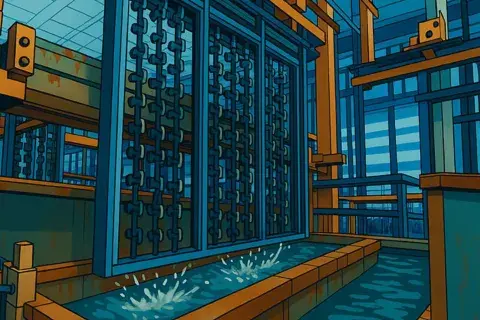
- Surface Finishing: Improper surface conditioning can leave behind residual contaminants. Along with this, deviations in plated layer properties may result in adhesion problems, increasing the likelihood of particle detachment.
- Handling and Logistics: Fasteners undergo various handling processes, including feeding and assembly, which can introduce additional contaminants.
- Washing Processes: While washing steps are included to remove particles, inadequate procedures can leave behind residual contamination.
Optimizing Technical Cleanliness in Fastener Production to Minimize Particles
To maintain high levels of technical cleanliness, industry standards such as VDA 19 and ISO 16232 prescribe specific methodologies for assessing and reducing particle contamination. These methods involve filtration-based particle analysis, where a defined quantity of fasteners is subjected to washing and subsequent microscopic evaluation to count and categorize residual particles.
One significant improvement in fastener cleaning is the optimization of surface conditioning during surface preparation. Comparative studies have demonstrated that reinforced pickling methods—including those that utilize specialized additives, such as our ACTANE additives—can significantly reduce particle counts. These additives enhance cleaning efficiency, ensuring better adhesion of coatings and reducing residual contaminants.
Ensuring Reliability in Automotive Applications
The consequences of inadequate technical cleanliness can be severe. Loose metallic particles from fasteners can compromise the performance of electronic braking systems, steering controls, and other critical automotive functions. By implementing best practices in surface finishing, material handling, and washing techniques, manufacturers can significantly mitigate these risks.
As automotive electronics evolve, the industry must remain vigilant in maintaining and advancing technical cleanliness standards.
Conclusion
Technical cleanliness in fastener production is a critical factor in ensuring the safety, reliability, and performance of modern automotive electronic systems. By understanding contamination sources and implementing effective cleaning strategies, manufacturers can enhance product performance and meet increasing industry demands. With continued focus on best practices and innovative cleaning solutions, the automotive sector can achieve higher levels of technical cleanliness and reliability in electronic component integration.
Ready to take the next step in your cleanliness journey? Click here to connect with us!